
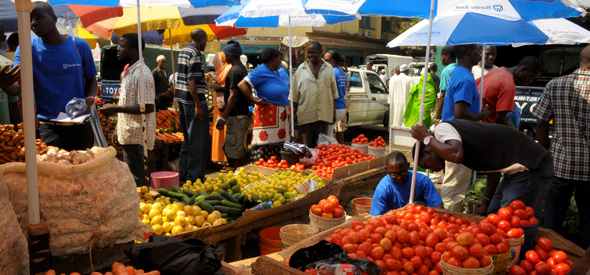
Malawi’s economy rests not on the few corporates that dominate the skyline but on the countless small businesses and cross-border traders who power daily commerce. These under-$100,000 traders are the true bedrock of the nation. They supply the parts and raw materials that keep corporates running, bring in groceries and household goods that feed families, and maintain competitive pricing that shields Malawians from runaway costs.
Yet, instead of nurturing this ecosystem, the Malawi Congress Party (MCP) government chose to punish it. Through harsh and restrictive policies like Form 12 and CD1 requirements, small traders were strangled. A system designed as if only large exporters matter ignored the reality that forex in Malawi mostly circulates through the hands of small-scale players—women, youth, and entrepreneurs hustling across borders.
The Domino Effect
The outcome was predictable:
• Forex disappeared. With restrictions, small traders either hid forex or bypassed the formal system altogether.
• Corporates choked. Big businesses that depend on small suppliers soon felt the squeeze—unable to get inputs at the right price or time.
• Consumers paid more. With fewer goods circulating, cooking oil, building materials, ICT supplies, and groceries became expensive.
• The economy collapsed. The flow of goods, cash, and forex—the lifeblood of any nation—was disrupted at the grassroots level.
Lessons From Neighbors
Countries like Tanzania and Zambia understand this. They know small-scale cross-border trade naturally brings money back home because it is reinvested into goods, tenders, and local consumption. That’s why they don’t impose such punitive forex controls on small traders. Their markets remain stocked, pricing remains competitive, and forex isn’t scarce.
A Policy Miscalculation
By targeting under-$100,000 traders as if they were the threat, MCP destroyed the very foundation on which Malawi’s corporates, industries, and families stand. Instead of widening the forex base, policy narrowed it. Instead of creating circulation, it created scarcity. Instead of growth, it triggered collapse.
The Way Forward
If Malawi is to rise again, it must reverse these policies. Small-scale exporters and cross-border traders must be free from unnecessary paperwork and forex traps. CD1 forms and restrictive measures should apply only above $100,000 transactions—where capital flight risks are real. Below that threshold, let the economy breathe.
Small traders are not a threat—they are the nation’s lifeline. When they thrive, corporates thrive. When they are punished, the entire economy pays the price. MCP’s failure to recognize this truth is why Malawi’s economy collapsed under their watch.












Leave a Reply