
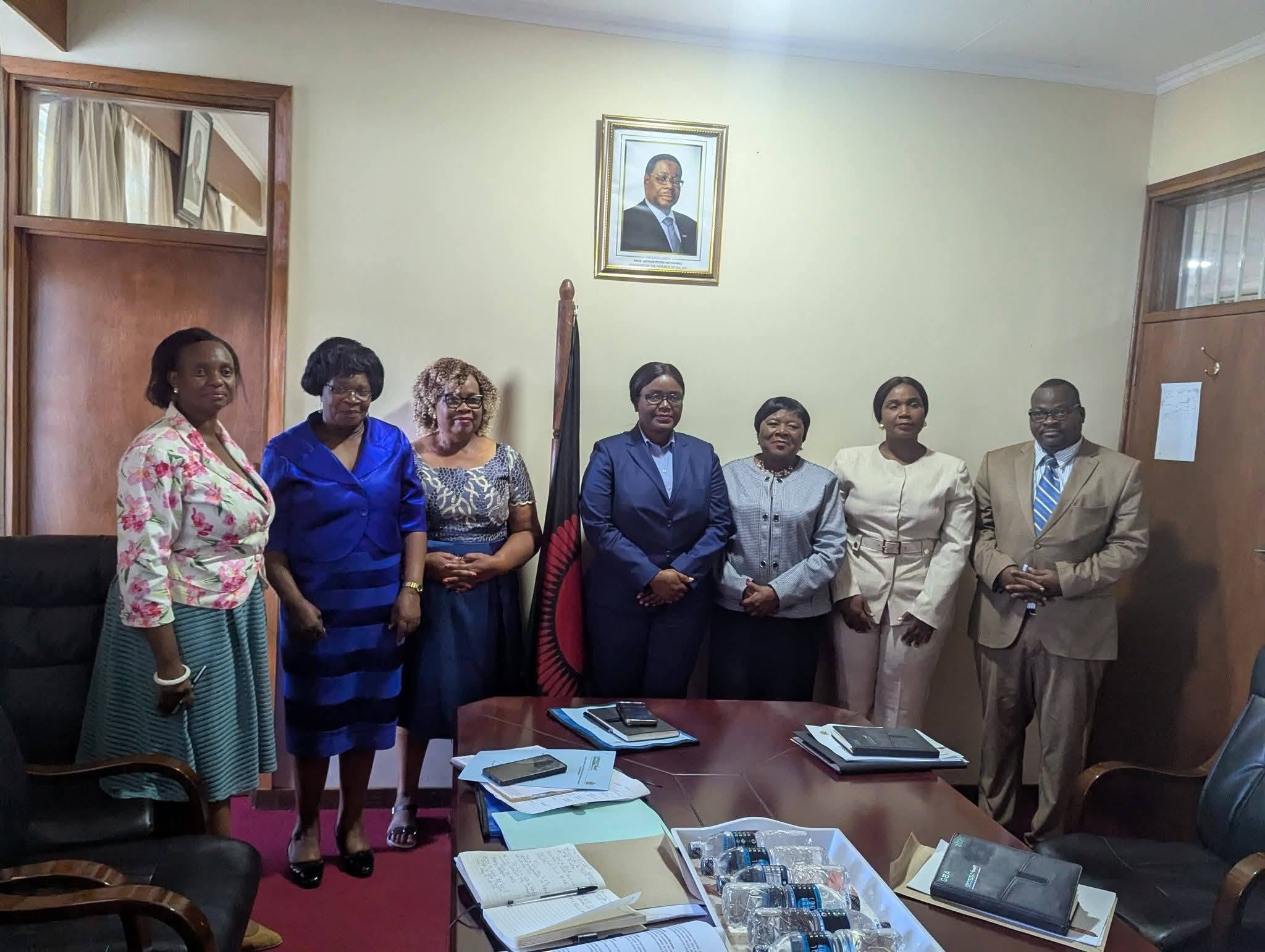
Questions are mounting over Parliament’s Public Appointments Committee (PAC) and its role in scrutinising appointments to the Greenbelt Authority (GBA) Board, amid concerns that some appointees’ qualifications and professional backgrounds may not meet the requirements set by law.
A review of curriculum vitae submitted for the appointments has raised questions about whether four board members — Mary Agness Nyirenda, Jannet Fatch Kamanga, Ephrina Nhlane and Lonia Nkhoma — possess the minimum qualifications prescribed under Section 5 of the Greenbelt Authority Act, 2017.
The concerns have also reignited questions about the country’s preparedness to achieve the Malawi 2063 development agenda, particularly in agriculture, industrialisation and job creation, when institutions entrusted with implementing major development projects are overseen by boards whose members’ relevant expertise has been questioned.
The central issue is whether PAC adequately examined the appointees’ academic qualifications, professional experience and capacity to provide effective oversight before confirming their appointments.
Under Section 5(4)(a) of the Act, board members are required to possess at least a bachelor’s degree or its equivalent from a recognised and reputable institution, alongside expertise and experience relevant to the authority’s functions.
The Greenbelt Authority plays a key role in advancing large-scale irrigation development and improving agricultural productivity — areas considered critical to Malawi’s long-term economic transformation.
The questions surrounding the board therefore go beyond academic qualifications.
They raise concerns about whether the institution has the level of technical and professional oversight needed to scrutinise management decisions, assess major investments and ensure that public resources deliver the intended results.
PAC’s oversight role questioned
Section 5(1)(a) of the Act provides for presidential appointments to the board, subject to confirmation by Parliament’s Public Appointments Committee.
This places PAC at the centre of the process of determining whether nominees meet the legal requirements and possess the relevant experience to discharge their responsibilities.
The committee’s role is particularly important because board members are expected to provide strategic direction, hold management accountable and scrutinise decisions affecting the authority’s operations and development projects.
If nominees lack the requisite knowledge and professional experience, questions arise about their capacity to challenge management proposals, assess technical reports and competently advise on the institution’s operations.
This raises a fundamental question: how can Malawi expect the Greenbelt Authority to contribute effectively to Vision 2063 through agricultural transformation and job creation if those entrusted with overseeing its operations cannot demonstrate the qualifications and expertise required for the task?
The CVs reviewed do not list bachelor’s degrees for Nyirenda, Kamanga, Nhlane and Nkhoma. The documents also raise questions about the extent to which their professional backgrounds align with the authority’s mandate.
However, the documents reviewed do not establish whether the four appointees possess additional qualifications that were not included in the CVs or whether PAC accepted any professional credentials as equivalent to the statutory requirement.
The appointing authority and PAC therefore need to clarify how the candidates’ eligibility was assessed and what evidence informed the committee’s decisions.
Questions over four appointees
Nyirenda’s CV documents a career in nursing and midwifery, including service as a district nursing officer and chief nursing officer at Zomba Central Hospital between 2009 and 2013.
Her listed qualifications include nursing and midwifery certificates and community health nursing training. However, the CV does not list a bachelor’s degree or clearly demonstrate experience in irrigation development or large-scale agricultural projects.
Kamanga’s professional background is in finance and business management. She worked at NICO Holdings Limited between 2006 and 2009 before becoming operations director at Gene Marks Associates in August 2009.
Her CV lists ACCA qualifications and states that she qualified as a Chartered Accountant in Malawi.
While accounting is among the professional sectors identified for representation on the board, her CV does not list a bachelor’s degree. It remains unclear whether her professional qualifications were considered equivalent to the statutory requirement.
Nhlane’s CV lists a Junior Certificate, a Diploma in Secretarial Administration from the Polytechnic and several short courses.
She retired from government service in 2020 after working in various administrative roles. However, the document does not list a bachelor’s degree or clearly demonstrate experience in irrigation, agricultural development, engineering or another technical field directly related to the authority’s mandate.
Nkhoma, identified in her CV as a prophetess and pastor, has more than 20 years of ministry experience. She has also participated in pig farming, poultry farming and crop production.
Although her farming activities relate to agriculture, her CV does not list a bachelor’s degree or an equivalent qualification. Further clarification is therefore needed on how her credentials were assessed against the requirements of the Act.
Nsomba’s academic profile differs
The CV of another appointee, Mirriam Mangulenge Nsomba, presents a different academic profile.
It lists a Master of Engineering in Telecommunications from the University of Cape Town and a Bachelor of Science in Electrical Engineering from the University of Malawi’s Polytechnic.
Nsomba also has more than 20 years of experience in telecommunications and information technology.
Her listed board experience includes the Public Procurement and Disposal of Assets Authority and CreditData Credit Reference Bureau. She has also been involved in overseeing ICT installations for the Greenbelt Authority.
Her academic record appears to satisfy the minimum degree requirement. However, whether her professional expertise adequately meets the needs of the board remains a separate consideration, particularly given the authority’s focus on irrigation and agricultural development.
Alleged family connections raise further questions
Separately, this publication has received claims that some appointees have family or close personal connections to Agriculture Minister Roza Fatch Mbilizi.
The claims allege that Nyirenda is the minister’s aunt and Kamanga her sister. Nhlane and Nsomba have also been alleged to have family or close personal connections to the minister.
This publication also understands that Nkhoma is the mother of Benedicto Nkhoma, a social media activist alleged to be sympathetic to the Democratic Progressive Party (DPP).
Accountability and Vision 2063
The Greenbelt Authority is responsible for programmes involving public resources, land, water and major agricultural investments. Its board must therefore be capable of providing effective oversight and ensuring that management decisions support the institution’s mandate.
Section 5 of the Act also provides for representation from farmers’ organisations, the legal profession, the accounting profession, irrigation or related engineering, and the private sector.
Meanwhile, Section 15 contains safeguards requiring board members with specified interests in matters under consideration, including certain interests involving immediate family members, to disclose those interests and refrain from participating in the relevant discussions or votes.
The provision does not automatically disqualify relatives of public officials from board membership, but it reinforces the importance of managing potential conflicts of interest.
Ultimately, PAC must account for the scrutiny it gave the appointments.
Did the committee verify the nominees’ qualifications? How did it determine whether their professional experience was relevant to the authority’s work? Were equivalent qualifications assessed against the law? And what evidence convinced the committee that the nominees could competently oversee an institution central to Malawi’s agricultural transformation?
These are important questions for a country seeking to achieve Malawi 2063, where agricultural productivity, industrialisation and employment creation are key development priorities.
If boards overseeing such institutions are not equipped with the requisite knowledge, skills and experience, their ability to challenge management, scrutinise expenditure and provide sound strategic guidance may be weakened.
The issue, therefore, is not merely who sits on the Greenbelt Authority Board, but whether the appointment and confirmation process has ensured that those entrusted with overseeing the institution are capable of delivering on its national mandate.






Leave a Reply